On occasion of International Women’s Day, the Centre for Future Work’s Senior Researcher Lisa Heap reviews the opportunities to use recent industrial relations reforms to more ambitiously address Australia’s gender pay gap.
This International Women’s Day, it is time to call on Australia’s workplace umpire, the Fair Work Commission, to finally close the gender pay gap.
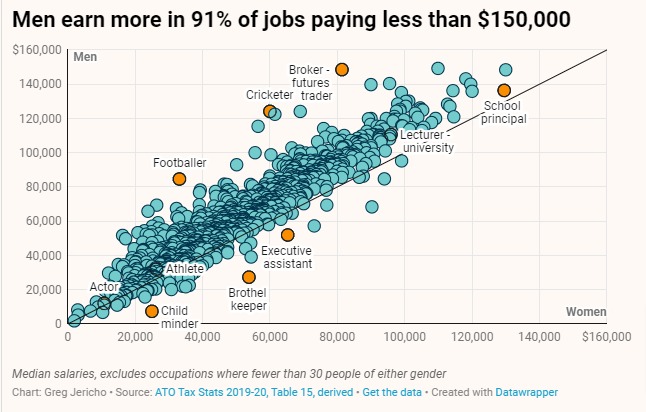
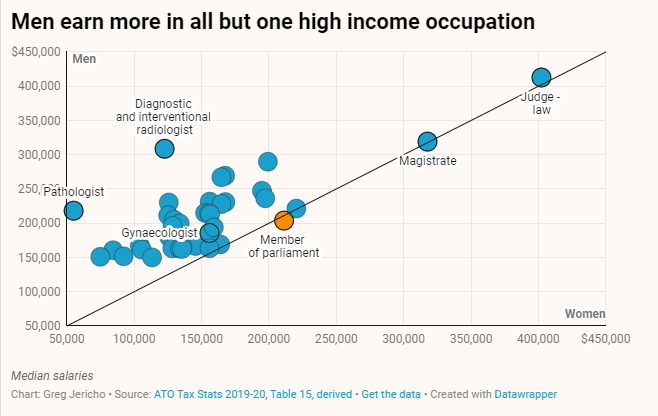
Half a century after the commission’s predecessor granted women “equal pay for equal work” in a landmark case in 1969, the gap remains between 12% and 21%.
Amendments to the Fair Work Act by the incoming Labor government in 2022 gave it new tools to close the gap by addressing the undervaluation of work in traditionally female-dominated occupations.
If it uses these tools to their full potential, 2024 will be a landmark year in the genuine achievement of equal pay for equal work.
What we’ve been doing hasn’t much worked
Traditionally in Australia, addressing gender-based undervaluation has relied on two approaches.
The first has been to argue the business case for gender equality – convincing employers they’ll be rewarded for “doing the right thing”.
The second has been to bring equal pay cases to tribunals.
Unfortunately, neither approach has been successful. In particular, pushing for equal remuneration through tribunals has been time-consuming and expensive.
These tribunals, historically working on models of male full-time wage earners, have struggled to understand the undervaluation of work performed predominantly by women.
The commission’s new tools
The commission’s act has been rewritten to require it “to promote job security and gender equality.”
It also has the power to make equal remuneration orders either on its own initiative or on application in order to bring about equal pay for work of equal or comparable value.
A further new development is the establishment of expert panels to assist in gender-related cases. Advice from gender experts should assist in overcoming historical gender biases in commission decisions.
Perhaps the most promising tool is the change to the commission’s modern awards objective, which requires it to eliminate gender-based undervaluation of work and provide workplace conditions that facilitate women’s full economic participation each time it reviews an award.
Among other things, this requirement is likely to result in provisions that ensure part-time work is treated equally to full-time work and ensure a better balance between work and caring responsibilities.
Amending awards is likely to be particularly important for women given that almost three in five of the workers on awards are women. Men are mainly on negotiated agreements.
If the commission wanted to, it could hold a wide-ranging inquiry into the many factors that have contributed to gender-based undervaluation of women’s work.
It could also review entire industries and occupations that are female-dominated, upgrading multiple awards at the same time. This would avoid lengthy and costly reviews of individual awards.
What’s likely in 2024
The Fair Work Commission’s resolve to make lasting change will be tested by several matters currently before it.
The commission is due to issue its final decision in the case lodged by the Australian Nursing and Midwifery Federation, the Health Services Union, and the United Workers Union on the value of the work done by workers in aged care.
An initial interim decision delivered in 2022 awarded some – but not all – of these workers a 15% increase, finding that work in feminised industries had been historically undervalued and the reason for that undervaluation is likely to be gender-based”.
Workplace Relations Minister Tony Burke backed the decision, saying it was merely the “first step”.
Another application, for nurses and midwives outside of aged care, was lodged by the Australian Nursing and Midwifery Federation in February this year.
The commission has already started the process of grappling with gender-based undervaluation in modern awards, commissioning research that documents the segregation of women and men into different occupations and industries.
Further research documenting the history of a select group of female-dominated modern awards and identifying the extent to which common elements indicate gender-based undervaluation, is due to be released in April.
It will feed into the annual wage review due by the middle of the year.
How to be bold
Gender-based undervaluation of women’s work won’t be eradicated by incremental adjustments.
Here are three bold steps the commission could take:
- grant a minimum interim 12% increase (one estimate of Australia’s national gender pay gap) across the board for female-dominated awards in this year’s annual wage review
- develop new systems for classifying work and ascribing work value, breaking with the previous standards built around skills and qualifications in male dominated occupations
- better consider the uneven bargaining power in industries such as nursing where governments fund care work and try to restrain costs.
The changes to the Fair Work Act that allow multi-employer bargaining are a start, but unlikely alone to correct the undervaluation of women’s work.
In female-dominated industries where collective bargaining is non-existent or ineffective, the commission should step in and further increase wages.
The Fair Work Commission has been given the tools. This should be the year it applies them.