Category: Law, Society & Culture

Research branch

  • Casual Job Surge Widens Gender Pay Gap

    Casual Job Surge Widens Gender Pay Gap

    Share

    New research, released for International Women’s Day (8 March 2021), shows Australia’s recovery from the pandemic recession has widened the gender pay gap, as women’s jobs returned on a more part-time and casualised basis than for men.

    The report, by the Centre for Future Work, warns that Australia’s gender pay gap could deteriorate even further in the wake of policies proposed by the Government for 2021: including the further expansion of casual work and reduced pay for part-time workers, tabled in the omnibus industrial relations bill; public sector pay caps for both federal and state employees; and a high-cost, inaccessible childcare system.

    Key findings:

    • Women suffered disproportionate job losses when the COVID pandemic hit, and as the economy recovers are returning to jobs that are relatively more insecure.
      • Employment for women declined almost 8% between February and May 2020—over 2 percentage points worse than for men.
      • Women’s employment is still 0.9% lower than in January last year (around 53,000 less jobs), while male employment went up over that same period (by an additional 7,000 jobs).
      • Job-creation since May (the worst month of the COVID recession) has been heavily concentrated in casual and part-time jobs. From May through November, casual jobs made up over 60% of new jobs –and women filled 62% of those casual roles.
      • The disproportionate concentration of women in newly-created casual and part-time jobs is largely responsible for a significant widening of the gender pay gap after May.
    • Measuring the gender pay gap using total average earnings data (including both full-time and part-time workers, and bonuses and overtime as well as ordinary time wages) indicates that the gender pay gap is 31% across all jobs. That is a more dire, but more accurate, measure of the pay gap than other measures which include only full-time jobs.
    • Three major existing and proposed government policies could further widen pay inequality in 2021:
      • The further expansion of casual work and reduced pay for part-time workers, tabled in the omnibus industrial relations bill.
      • Public sector pay caps for both federal and state employees.
      • A high-cost, inaccessible childcare system.

    “The gendered nature of the pandemic recession on Australia’s labour market has markedly worsened pay inequality,” said Alison Pennington, senior economist at the Centre for Future Work.

    “Women lost jobs at a greater rate than men when the pandemic hit, and as the economy has recovered, are returning to fewer jobs offered on a more casualised basis. The gendered employment recovery is disproportionately leaving women with less hours, security and pay than men—a clear example of why a simple post-COVID “snap back” was never adequate for women.

    “Women have been bearing the brunt of the COVID recession while governments have targeted stimulus spending in bloke-heavy industries, neglecting investment in industries that support women’s employment, including healthcare, education and social services. To stop further deterioration in pay inequality, targeted efforts to lift women’s work and earning opportunities is critical.

    “Focused investment in women’s job creation, free childcare, and wage-boosting industrial relations policies are all within reach of governments at both federal and state levels.”


    Related research

  • Migrant Workers Abandoned in the COVID Recovery

    Migrant Workers Abandoned in the COVID Recovery

    by Alison Pennington

    COVID continues to sweep Europe and the US, while Australia celebrates near-elimination of community transmission. But Australia’s public health success has not come without significant economic and social hardship for large sections of our community – especially migrant workers. Thousands of migrant workers were pulled off the job to stop the spread of COVID-19, and excluded from key government income support programs including JobSeeker and JobKeeper. Temporary migrant workers are still left without access to Medicare.

    In this short, accessible commentary, Senior Economist Alison Pennington outlines how the pandemic, the resulting recession and government COVID-era policies have increased risks to migrant workers’ financial security, and health and safety. Building more secure, inclusive labour markets can reduce risks that future major events don’t hit the most vulnerable hardest.

    This commentary was prepared for presentation to the Migrant Workers Centre Conference, November 2020.

    Migrant Workers & The COVID-19 Recession

    by Alison Pennington, Senior Economist at Centre for Future Work

    COVID infections continue to sweep Europe and the US while Australia celebrates multiple days without any cases of community transmission. But Australia’s public health success has not come without significant economic and social hardship for large sections of our community – especially migrant workers. Thousands of migrant workers were pulled off the job to stop the spread of COVID-19, and excluded from key government income support programs including JobSeeker and JobKeeper. Temporary migrant workers are still left without access to Medicare.

    As the economy slowly recovers from recession, migrant workers will face even greater hardship in accessing decent jobs and incomes. The expiration of temporary work visas without supports to reconnect with new employers, and in jobs that pay enough, will expose migrant workers to more intense exploitation.

    The federal government’s response to the unprecedented COVID-19 economic crisis has included big spending on tax cuts, subsidies and other business concessions as part of its “business-led recovery”. But there are many problems with how the government thinks about the economy, that will mean the economic crisis will be longer and more painful than it needs to be.

    The pandemic has left deep cuts in the economy: two million people (15% of labour force) are either unemployed, working far fewer hours than normal, or have left the labour market all together since the March lockdowns; consumer spending has not fully recovered after lockdown restrictions were lifted and people prefer to save in preparation for harder times. Companies are focused on recovering or maintaining profits, cutting investments in their businesses, and cutting spending on employment and wages. Private investments have been decreasing for years and will not miraculously rebound during a recession. Trusting the private sector to lead our post-COVID economic recovery therefore is like hoping for a miracle.

    Income tax cuts are mainly symbolic and do not have real and lasting impacts on boosting spending in the economy. In fact, normal pay rises are far more effective than tax cuts because the effect of wage growth is permanent and cumulative. The announced tax cuts are also unfairly designed to benefit high-income earners. 88 per cent of the combined permanent benefit of the tax cuts will go to highest-fifth of income earners whereas low- and middle-income earners will get only a one-time rebate of $1,080 at the next tax return.

    Wage growth is expected to stay at 1.25 per cent in 2021 – enough only to match the slow rise in consumer prices. But a higher unemployment rate and continued increase in part-time and casual jobs will cut household incomes even more. If the government adopted measures to strengthen wages including higher minimum wages and stronger collective bargaining rights, our recovery would be on a better track.

    Youth, women, migrant workers and long-term unemployed are in most need of targeted job-creation policies. But the federal government has presented no plan to create jobs for the millions of unemployed, underemployed and disenfranchised who want and need paid work. The JobMaker program provides a subsidy for 12 months to employers creating new jobs for young workers on unemployment payments. It is a short-sighted initiative that will not reach its intended claim of creating 450,000 jobs (Treasury estimate now 45,000). There is no guarantee young workers will maintain employment once the government stops paying for the subsidy.  Without job protections, the program will encourage the “churning” of vulnerable young workers in low-wage, insecure jobs. It could also displace existing workers and discourage the hiring of others. Migrant workers have already experienced mass redundancies when employers chose to engage workers who qualified for the JobKeeper subsidy. Migrant worker displacement may occur under JobMaker.

    Despite Australia’s macroeconomic weakness, the government intends to decrease spending by billions in cuts to the JobKeeper and Coronavirus Supplement payments in March 2021. The impacts on the jobs and incomes of low and middle-income workers will be disastrous. The real way to overcome the recession will be to restore the capacity of people to work, earn and be healthy, engaged members of a more inclusive Australian economy. This can be achieved only when the government commits to a long-term, ambitious vision for economic and social change, backed by substantial and sustained public spending. This vision should create more secure jobs, invest in climate-friendly industries, and strengthen and expand our public services like healthcare, education and skills.

    Rather than wait for private sector investment, the federal and state governments can expand direct public sector employment now. They can also ensure all people residing in Australia are protected from poverty and insecurity now. Urgent measures should be taken immediately to address the pronounced risks to migrant workers’ financial security, and health and safety experienced during this crisis:

    • Expand JobSeeker and the Coronavirus Supplement coverage to excluded migrant workers. Reverse the punitive and economically counterintuitive cuts to the Coronavirus Supplement, and permanently restore the $550 per fortnight rate.
    • Expand JobKeeper coverage to all workers, and end the two-tiered wage subsidy scheme, returning the original $1,500 flat payment rate permanently.
    • Create a paid sick leave scheme available to all workers, regardless of their work status.

    The pandemic has shone a light on the growing scourge of insecure work. Around half of all employment in Australia has one or more dimensions of precarity including casual, temporary, part-time insufficient-hours work, and self-employment. Precarious work contributed to the community spread of disease, such as in the private aged care system where widespread practices of multiple jobholding led to virus transmission between facilities.

    We have worked together to eradicate COVID-19, and we can work together to eradicate insecure work. Working to build more secure labour markets for all is about reducing risks that major events don’t hit the most vulnerable hardest. Job creating investment, quality public education and skills systems, income supports for all, and extending minimum labour standards like Award wages and collective bargaining are critical to an inclusive post-COVID recovery. And by strengthening the collective efforts of workers to take action in their unions, we can put good jobs and incomes in the driving seat of Australia’s economic recovery.


    You might also like

    Centre For Future Work to evolve into standalone entity

    The Centre for Future Work was established by the Australia Institute in 2016 to conduct and publish progressive economic research on work, employment, and labour markets. Supported by the Australian Union movement, the centre produced cutting edge research and led the national conversation on economic issues facing working people: including the future of jobs, wages

  • Yes, lockdowns mean lost jobs. But data shows that not locking down causes much more economic damage

    Originally published in Toronto Star on January 16, 2021

    With new stay-at-home orders covering many parts of the province, Ontarians are settling in for a month (at least) of daunting isolation. Restrictions are also being tightened in other provinces to slow the spread of COVID-19, until vaccines can turn the tide of the pandemic.

    Despite accelerating infection and overflowing hospitals, many oppose the new restrictions on grounds that their economic costs are just too high. Business lobbyists grumble that health rules on retailers, airlines, cinemas, ski resorts, gyms, and more are onerous and unfair. Each sector invokes comparisons to others which supposedly get off easier. The common thread in their resistance is an assumption that strong health restrictions are deeply damaging the economy.

    As the pandemic rolls on, however, it is increasingly clear that the best way to protect the economy is to stop COVID. Yes: lockdowns reduce economic activity and employment. But not locking down, letting the virus run rampant, causes more economic damage — on top of the toll in lives and suffering. Anyone concerned about the economy should be pleading for fast, powerful lockdowns, not demanding a return to business-as-usual.

    The correlation between controlling contagion and economic recovery is clear across Canadian provinces: those with fewer COVID cases have achieved the strongest employment results since the pandemic hit. It’s not often that New Brunswick leads the nation in employment growth — but it did last year. Its near-elimination of the virus was the obvious reason.

    In this context, the protestations of premiers Doug Ford and Jason Kenney that fighting COVID must be “balanced” against the interests of business were always self-defeating. Even if they were motivated solely by desire to protect business, their top priority should have been stopping COVID. The faster and harder that battle was waged, the better business fared.

    The correlation between COVID suppression and economic performance is also obvious in international data. Several countries moved fast with severe but temporary restrictions on mobility and business; and they are now harvesting the fruits of their foresight. COVID-slaying nations like Australia, China, New Zealand, South Korea and Taiwan are already enjoying powerful and sustained economic recoveries. Their economies (forecast to grow by five to eight per cent this year) are racing far ahead of those still lurching from one wave of infection to the next.

    No one escaped the economic fallout of the pandemic. But after powerful action to suppress contagion, these countries are now recovering strongly and predictably. Elsewhere, the economic outlook is far less certain. In Canada, for example, our hopeful summertime recovery is already disintegrating: employment is now falling again. America, Britain, and other places where COVID suppression failed miserably are faring even worse.

    A particularly powerful illustration of the link between public health and economic recovery is provided by the experience of Victoria, the second largest state in Australia. After initial success limiting COVID-19’s spread, a second wave took hold in Melbourne (Victoria’s capital), infecting 600 people per day by early August. The state government ordered a strict lockdown, more severe than anything yet experienced in Canada: overnight curfew, closure of most workplaces, and strict bans on social gatherings and travel.

    The government was pilloried for its response — facing sustained attacks from its federal counterpart, business groups, and conservative commentators, all lamenting Victoria’s descent into “dictatorship.” Yet after 111 long days, Victoria achieved something almost unheard of: mass community spread was stopped, and new cases fell to zero by late October. Now the state economy is blossoming: employment rebounded 2.2 per cent in November alone, retail sales grew 22 per cent the same month, and Victorians are flocking back to restaurants, pubs, and malls. All those CEOs whining about Canada’s late and half-hearted restrictions must be drooling with envy.

    Leaders like Kenney and Ford were unduly influenced by short-sighted concern with business profits. Their reticence has created needless harm, for both public health and the economy. If we’d moved faster and more powerfully to limit contagion, business would already be better off.

    The economy is made up of human beings who work, produce, and consume. There’s no tradeoff between the economy and the health of those same human beings. The sooner we recognize they are one and the same, the sooner we can finally get serious about winning this battle.

    Jim Stanford, director of the Centre for Future Work in Vancouver, is a freelance contributing columnist for the Star. Follow him on Twitter: @jimbostanford


    You might also like

    Commonwealth Budget 2025-2026: Our analysis

    by Fiona Macdonald

    The Centre for Future Work’s research team has analysed the Commonwealth Government’s budget, focusing on key areas for workers, working lives, and labour markets. As expected with a Federal election looming, the budget is not a horror one of austerity. However, the 2025-2026 budget is characterised by the absence of any significant initiatives. There is

    Dutton’s nuclear push will cost renewable jobs

    by Charlie Joyce

    Dutton’s nuclear push will cost renewable jobs As Australia’s federal election campaign has finally begun, opposition leader Peter Dutton’s proposal to spend hundreds of billions in public money to build seven nuclear power plants across the country has been carefully scrutinized. The technological unfeasibility, staggering cost, and scant detail of the Coalition’s nuclear proposal have

  • Pandemic Exacerbated Inequality, Insecurity in Australia’s Labour Market

    Pandemic Exacerbated Inequality, Insecurity in Australia’s Labour Market

    Share

    A year-end review of the dramatic changes in Australia’s labour market in 2020 has confirmed that the worst economic impacts of the Covid-19 pandemic were felt by Australians in relatively low-paid, insecure jobs.

    Key Findings:

    • Workers in casual jobs lost employment at a rate 8 times faster than those in permanent positions
    • Part-time workers suffered job losses 3 times worse than full-time workers
    • Young workers, women, and workers who do not work in offices also suffered disproportionate job losses during the initial shutdowns – and continue to experience much worse employment conditions
    • Worse yet, the report shows the rebound in employment that began in May has seen a historic surge in insecure jobs – which account for the vast majority of new jobs created since the economy began re-opening

    “It is painfully ironic that the worst impacts of the pandemic were felt by those who could least afford to lose their work and income,” said Dr Jim Stanford, Director of the Centre for Future Work, and co-author of the report.

    “Both on the way down, and on the way back up, this recession has reinforced the dominance of insecure work in Australia’s labour market.

    “Precarious work strategies explain why the effects of the pandemic were so painfully unequal, and this new surge in insecure work makes Australians even more vulnerable to such shocks in the future.

    “Covid-19 had a terrible impact on both the quantity and quality of work in 2020. Because Australia has been relatively successful in controlling the virus, the labour market could improve significantly in 2021, however, the rapid expansion of insecure work poses a major challenge to the stability and prosperity of Australian households,” Dr Stanford said.

    Other findings of the report include:

    • Since May, over 400,000 casual jobs have been created (2200 per day, on average), accounting for over 60% of all new waged positions since the recovery started. That is the largest surge in casual employment in Australia’s history – contradicting business and government claims that uncertainty about casual employment rules are holding back hiring.
    • Workers over 35 years of age have regained all of the jobs lost in the pandemic, and then some. All remaining job losses are concentrated among workers under 35.
    • Office-based occupations (professionals, clerical workers, and most managers) have also regained pre-pandemic employment levels. But other occupations (especially community and personal services, sales workers, and labourers) continue to suffer major employment losses.
    • New labour laws proposed by the Commonwealth government would accelerate the surge in insecure work: liberalising the use of casual labour by employers, and allowing them to treat permanent part-time workers more like casuals.

    Related research

  • 2020 Year-End Labour Market Review: Insecure Work and the Covid-19 Pandemic

    2020 Year-End Labour Market Review: Insecure Work and the Covid-19 Pandemic

    by Dan Nahum and Jim Stanford

    Australia’s labour market experienced unprecedented volatility during 2020 due to the Covid-19 pandemic and resulting recession. In the first part of the year, employment declined faster and more deeply than in any previous economic downturn, as workplaces were closed to control the spread of infection. Then, after May, employment rebounded strongly. The subsequent recovery has replaced over 80% of the jobs lost in the initial downturn. While considerable ground remains to be covered to complete the employment recovery, the turn-around in the quantity of work has been encouraging.

    However, the pandemic also highlighted stark fissures in Australia’s labour market. The employment and income impacts of the pandemic were starkly unequal, across different groups of workers. This report highlights several ways in which the pandemic has increased inequality in Australia, and reinforced the dominance of insecure work in the overall labour market.


    Full report

    Share

  • IR Bill Will Cut Wages & Accelerate Precarity

    Originally published in Jacobin on December 15, 2020

    The Morrison government has proposed sweeping changes to labour laws that will expand unilateral employer power to cut wages and freely deploy casual labour. Together, the Coalition’s proposed changes will accelerate the incidence of insecure work, undermine genuine collective bargaining, and suppress wages growth. Impacts will be felt across the entire workforce – casual and permanent workers alike.

    In this extended commentary, Senior Economist Alison Pennington explains the main components of the IR Omnibus Bill, assesses their impacts on workers’ wages and labour protections, and offers some strategic analysis on how labour advocates can work towards addressing insecure work.

    This commentary was originally published in Jacobin. A shorter edited version was published in Michael West Media & John Menadue’s Pearls and Irritations.

    Scott Morrison’s Industrial Relations Laws Are a Kick in the Teeth for Australian Workers

    By Alison Pennington

    The Morrison government has proposed sweeping changes to Australian labor laws intended to cut wages, entrench precarious work, and cripple unions. The proposed changes would sweep away the remnants of collective bargaining and hand dictatorial power to bosses.

    Just a few months ago, Australia’s Coalition government was singing the tune of compromise and cooperation with unions. Now they’ve thrown away the songbook and taken the gloves off. Scott Morrison is giving Australian workers and unions class war — just in time for Christmas.

    Thanks to pandemic stimulus spending, 2020 was already a Christmas-bonus year for big business. With company profits up nearly 19 percent since 2019, they have already benefited to the tune of billions.

    But it’s never enough. So, industrial relations minister Christian Porter has introduced the Industrial Relations (IR) Omnibus bill. It’s a withering pro-business offensive aimed at slashing wages and resetting work conditions to boost profitability in the long term.

    The core of Porter and Morrison’s plan will grant employers the power to expand insecure work freely and to hijack enterprise bargaining. If it goes ahead, it will inflict a double wound on the working class, by degrading the Awards system (that sets minimum wages and conditions across industries) and by weakening what little remains of unions’ collective bargaining power.

    Never Let a Crisis Go to Waste

    The idea that workers’ economic security should be subordinated to business demands is archaic. It’s a form of employment that unions have fought bitterly since the nineteenth century, winning historic victories to curtail piece-work or at-home work, and to end the dictatorial control of gang masters over who did and did not work, and under what conditions.

    Some fruits of that multigenerational battle still remain embedded in today’s standard employment relationship, which guarantees rights to ongoing work and basic entitlements. However, neoliberalism’s decades-long onslaught has weakened unions. As a result, all of these abuses have returned, sometimes in new packaging — as is the case with the “gig economy.”

    GettyImages-919042992-900x600
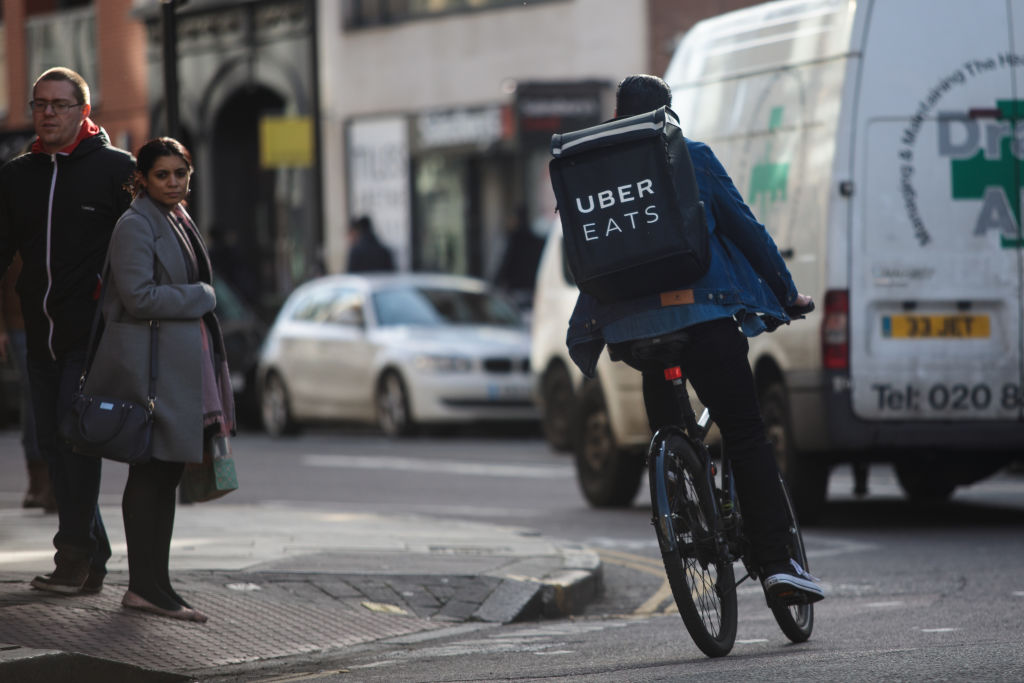
    An Uber Eats part-time worker. (Jack Taylor / Getty Images)

    Today, 2.6 million Australian workers are defined as “casual.” This means that one in every four workers has no right to ongoing work, and no basic holiday or sick leave entitlements.

    This is justified by the claim that casual workers receive “casual loadings” (extra pay) to compensate for forfeited conditions. But this is a myth. Far from being compensated for the value of lost entitlements, most casuals are in fact much worse off.

    One third of all casuals receive no loadings at all, and most casuals are not paid more than permanent workers in the same jobs. In industries with high casual density, the premium is around 4-5 percent — far from the oft-cited figure of 25 percent.

    Bosses love to praise the virtues of “flexibility,” claiming that casuals don’t want permanent work. But this mantra is also a lie — half of all casuals have worked regular shifts for one year or more.

    Rather than simply allowing firms to employ a few extra workers on a seasonal basis, casual work is increasingly the way that Australian businesses meet their medium- and long-term labor needs. And, in the post-COVID era, they increasingly see casual labor as the foundation for boosting profits.

    Accelerated Precarity

    Two recent major court cases found that businesses which employ casuals on regular, stable, and predictable schedules are liable to pay leave entitlements. It was estimated that this would cost employers over $39 billion.

    In response, business lobbyists unleashed campaigns to “resolve the definition issue” so as to avoid court-ordered repayments. This — as well as the growing importance of casual work to profits — explains why Morrison and Porter have made entrenching casual work the cornerstone of their IR Omnibus bill.

    They want to define casual work in the broadest possible terms. Any job deemed casual by the employer will be, legally, a casual job. This means your job can look like a permanent job and smell like a permanent job — but employers will still be able to legally engage you as a casual and strip your legal entitlements at will. This is a body blow to the present system of legal protections.

    The pandemic has highlighted the dangers of insecure work. But for the Coalition and their business allies, it changed nothing. Even while frontline, often insecure workers risked their lives, the government was keen to increase the number of workers trapped in precarious, low-wage jobs.

    First, the Coalition excluded over one million casuals from the JobKeeper wage subsidy. Then, they reduced the Coronavirus Supplement, hoping to force the unemployed and vulnerable into insecure work while making it cheaper for businesses to rehire workers. Next, Liberal treasurer Josh Frydenberg announced JobMaker — a payment that directly subsidizes new, insecure youth jobs that will allow bosses to sack existing, more expensive and older workers.

    The JobKeeper subsidy is set to end in March, exactly when Porter’s sharpened wage-cutting tools are due to kick in. Employers will go on the offensive, recouping lost public subsidies by taking even more from their workers.

    The bill’s supposed sweetener is a measure that will require employers to offer casuals permanent work if they have been employed for twelve months, with six months of continuous regular hours scheduling. Not only will it be easy for employers to vary hours and schedules to avoid meeting that high benchmark, they will also be allowed to refuse to make an offer on so-called “reasonable grounds.”

    The government was sure to define “reasonable” in incredibly broad terms and to deny workers the right to appeal a decision through the Fair Work Commission (FWC). Got a problem with your employer’s decision? The Federal Court will hear your case — but only if you have a spare ten or twenty thousand dollars lying around.

    Deregulating Permanent Work

    Accelerating the growth of insecure work is also about cannibalizing protections for the permanent workforce, by making permanent jobs resemble casual ones. New so-called “part-time flexi” reforms will let bosses employ permanent part-time workers as though they were casuals.

    Only sixteen hours will have to be paid according to normal permanent rates and entitlements, while an additional twenty-two hours (comprising a total work week of up to thirty-eight hours) will be free of overtime loading. With the stroke of a pen, this threatens to dissolve hard-won rights that deliver predictable and stable schedules for permanent part-time workers.

    With a flexible twenty-two hours of ordinary-time labor up for grabs, employers will be able to work these “part-time” workers like full-timers on a regular basis — as supervisors and managers, for example. But they won’t have the security of regular hours or receive overtime compensation for being at the employer’s beck-and-call. The flexibility will be blissful — for bosses.

    For all the Coalition rhetoric about “job creation,” this wholesale deregulation of working hours really means that bosses will be able to cheaply increase hours for existing workers in line with fluctuations in demand. That will free them from having to hire more people. It’s galling that the government would present the creation of a “part-time flexi” employment category as a solution to record-high and growing underemployment.

    There’s no shortage of glossy marketing. For example, low-wage work will be expanded under the guise of “roads to permanency.” But when you cut through the spin, the Coalition’s agenda is to reduce the incomes of millions and to deny millions more decent jobs. During a recession, with labor-force utilization already low, they’re arming employers with powerful weapons to cut wages and conditions in the jobs that remain. These moves will generalize despair and desperation across the entire workforce.

    Hijacking Collective Bargaining

    Worst of all, the IR Omnibus bill contains a trifecta of changes to the laws governing enterprise agreement (EA) making. These changes will allow businesses to draw up workplace agreements by themselves more easily — that is, without a union. They will be allowed to undercut the minimum rates and conditions outlined in industry Awards with these nonunion agreements. Additional changes will let employers lock in wages stipulated by an enterprise agreement for eight years at a time.

    This is nothing less than a hijacking of what’s left of collective bargaining. In fact, handing employers unilateral power over enterprise agreement wage-setting was the cornerstone of former Liberal PM John Howard’s infamous WorkChoices legislation.

    The Coalition’s plan will allow employers to bypass the Better Off Overall Test (BOOT) for two years. As it is, the BOOT ensures that new agreements do not leave workers worse off than under minimum Award conditions. The suspension of the BOOT coincides with new measures that will weaken scrutiny of subpar nonunion agreements by the FWC, unions, and employees.

    The move has been taken straight from the wish list of business lobbyists. It will open a floodgate of nonunion below-Award agreements that will permanently damage living standards.

    There’s a precedent for this. Under Howard’s WorkChoices, the “No Disadvantage Test” was abolished and unions were denied the right to contest agreements, leading to an explosion of nonunion agreements. Between 2004 and 2009, the proportion of nonunion agreements approved in the private sector rose from 20 to 60 percent.

    After 2009, when WorkChoices was partly rolled back, the number of dodgy agreements dramatically declined to pre-Howard levels. Why? Because as part of the Fair Work Act, the Better Off Overall Test was introduced.

    Even so, the WorkChoices-era surge in nonunion, low-wage agreements had a lasting, negative impact on wage growth. “Zombie Enterprise Agreements” persisted for years. For example, Merivale, a Sydney hospitality empire, paid over three thousand staff up to 20 percent below Award wages on an expired nonunion EA set in 2007 for over ten years.

    This is possible because EAs live on, sometimes for years, until they’re replaced or terminated — usually on request by unionized employees. Today, tens of thousands of workers are still languishing on Howard-era below-Award enterprise agreements.

    Unfair Work

    The FWC has the power to change and approve agreements so long as employees remain better off overall, compared to the relevant Award. On top of this, there already exists a relatively untested provision whereby the FWC may approve agreements with below-Award conditions in so-called “exceptional circumstances,” provided they meet the overall public interest.

    GettyImages-1214779323-900x609
    A couple who both lost their jobs recently watch local news in their apartment. (John Moore / Getty Images)

    The IR Omnibus bill will weaponize the “public interest test” governing this power, enabling business to push even further. The Coalition’s hand-picked business leaders in the FWC will surely oblige.

    Australian business and their allies in the Coalition have dedicated enormous resources to crushing what remains of collective bargaining. Their goal is to corrode the infrastructure of the labor movement’s past victories.

    This is why the Coalition also wants to introduce eight-year agreements on new projects valued at over $500 million or $250 million, if the project is of national significance. Existing laws mean that employers can only seek FWC approval on agreements for new projects (called “greenfields” agreements) after six months of bargaining with the relevant union.

    However, if the BOOT is scrapped, employers could feasibly draw up greenfields agreements undercutting Award conditions for up to eight years, circumventing unions and simply hiring a new workforce under the new agreement.

    Since Australia’s draconian anti-union laws prohibit industrial action at any time outside an EA bargaining period, eight-year agreements give employers the power to block strikes as well as to cut wages. There is also a political logic to it: it’s a cost and risk reduction strategy, guarding against any future joint campaigns that link unions with other elements of civil society. For example, unions will face crippling fines for striking at any time during the eight-year period to support campaigns against inappropriate development, or against new mining projects.

    As if this weren’t enough, the Coalition is bolstering the power of the courts and the anti-union Australian Building and Construction Commission to inflict millions of dollars’ worth of fines on unions for activities which are entirely normal and legal in other democratic countries.

    It couldn’t be clearer. Just as the Coalition’s 2020 budget gifted business with billions in subsidies, tax cuts, and other handouts, this, too, is a vast gift to capital, purchased at our expense.

    A Common Enemy

    The union movement has a good chance of stopping the BOOT changes in the Senate, where minor parties hold the balance of power. But everything else is up for grabs thanks to the Coalition’s Christmas “spirit of compromise.”

    Insecure work is the enemy of unionization. Workers living in permanent precarity and intermittent poverty are less likely to join unions. Only 8 percent of union members are casuals. And when the bargaining power of unions declines, all workers suffer.

    By expanding casual work, the IR Omnibus bill will strike the harshest and most comprehensive blow to wages and living standards in many years, both now and in the future. This is why the union movement must resist insecure work everywhere it rears its head.

    We need unions that are willing to build power among existing, permanent workers who are in a better position to endure the risks of industrial action. It’s still harder and more expensive to sack permanent, more senior workers. But without a fight back, this will change too — the growth of precarity means that even secure workers are on increasingly unsteady ground.

    Permanent conversion rights for casuals don’t work without workplace union power. Unions must unleash aggressive collective bargaining campaigns aimed at bringing all workers under the same agreement “roof” and into permanent work. This would have to include bringing contracted-out and labor-hire work back in-house.

    Since the most precarious sectors of the workforce have lower union power and no access to collective bargaining, we also need a united union movement willing to mobilize all of our 1.5 million members, linking the pockets of union power in the private sector (including construction, ports, and logistics) to our largest public sector bases in health care, education, and social services. We must weave good jobs back into the fabric of Australia’s social contract — this means fighting for jobs that offer rights to ongoing employment and basic entitlements like holiday pay, sick leave, and superannuation.

    Most importantly, reviving unions after years of decline will require determined efforts to rebuild a modern workers’ movement with deep support and social roots. This will mean working with climate action, anti-poverty, welfare rights, and other social justice and community organizations.

    Unions and their allies have to push for working-class politics at every level of government, from local to federal, and build a broad coalition that will put decent jobs and economic democracy at the center of a progressive vision for Australia.

    Public institutions like Medicare, public education, TAFEs, superannuation, and corporate taxation are widely popular. Australians broadly agree with the need to rebuild a domestic manufacturing sector and to refund the arts and tertiary education. The union movement could be the vehicle that makes these aspirations real.

    This project can be popular. This year, the profit-hungry zealots of Australian business and the Coalition’s conservative apparatchiks told us that “we must learn to live with the virus.” But Australians overwhelmingly disagreed, and instead supported the subordination of short-term business interests to the public good. Despite a well-funded conservative campaign, large majorities overwhelmingly supported shutting down the economy to save lives.

    Now we must protect ourselves against another virus that would irreparably damage the quality of workers’ lives in the name of higher corporate profits. That virus is insecure work. It’s lived among us too long — it’s high time we shut it down.


    You might also like

  • A Women’s Agenda for COVID-Era Reconstruction

    A Women’s Agenda for COVID-Era Reconstruction

    by Alison Pennington

    Share

    Women have been uniquely and disproportionately impacted by the COVID-19 pandemic and resulting recession: losing more jobs and hours, shouldering a higher unpaid caring work burden, and undertaking essential and frontlines jobs. Without targeted action to rebuild women’s jobs and ease caring demands, decades of collective advances toward decent paid work could be eroded.

    Alison Pennington, Senior Economist with the Centre for Future Work assisted The Australian Council of Trade Unions (ACTU) preparing the timely report Leaving Women Behind: The Real Cost of the COVID Recovery. The report documents the gendered impacts of the crisis and the federal government’s COVID-era policies, and outlines a public investment strategy to undo the damage of the crisis, and ensure women play an equal role in an inclusive economic recovery.

    To mark the release of ACTU’s report, the Australian Trade Union Institute hosted a webinar with ACTU President Michele O’Neil, Centre for Future Work’s Alison Pennington, Karen Batt (CPSU VIC), Helen Gibbons (UWU) and Julia Fox (SDA). The session presented the main report findings and considered how they might support campaigns for a gender-inclusive recovery.

    The full 38-page ACTU report is available below together with Alison’s presentation slides presented for the ATUI webinar.


    Related documents


    Leaving women behind report


    Presentation slides

    You might also like

    Austerity Threatens Women’s Access to Paid Work

    by Alison Pennington in The New Daily

    Women have suffered the worst labour market impacts since the shutdowns. Gender-unequal impacts have been due to women’s greater exposure to customer-facing industries shut down first by public health orders, higher employment intensity in insecure and part-time positions, and an increased caring burden unmet by the state. But instead of providing countervailing support, the federal government is accelerating women’s work crisis.

  • Australian Workplaces Unprepared for Rising Heat Stress in Light of Climate Change

    Australian Workplaces Unprepared for Rising Heat Stress in Light of Climate Change

    Share

    Last Summer’s devastating Black Summer bushfires exposed the under-preparedness of Australian workplaces to the serious health and safety risks of heat stress for many workers across Australia.

    Heading in to next Summer season, new research published today by the Centre for Future Work, outlines why working in extreme heat is a growing and urgent issue for workers, and what can be done by Governments and workplaces to mitigate these risks.

    Key findings:

    • Heat stress poses serious health and safety risks for many workers across Australia, and Australia must act on the causes of rising temperatures and changing weather patterns.
    • Four key groups of workers are at high risk of heat stress:
      • Workers who work inside, in environments with poor climate control, or whose work requires them to be exposed to heat and humidity;
      • Outdoor workers, especially those who are weather-exposed;
      • Workers moving between different climates as part of their work (i.e., moving between extreme heat and cold); and
      • Workers whose roles expose them to situational extreme heat, such as emergency workers and firefighters.
    • Current labour protections, including health and safety laws, are inadequate.
      • Many workers say that OHS policies might appear to offer protection, but in practice it is simply not the case.
      • Workers say that employers do not want work to stop even when heat stress risk is very high, and that employers prioritise productivity over worker health and safety.
      • The hazardous heatwaves, air quality, and bushfire smoke over the recent Black Summer has emphasised the inadequacy of current OHS regulations.
    • The conditions of a person’s employment fundamentally shape their experience of heat stress. Workers who are employed casually, who work in labour hire arrangements, or who are gig workers, often have less capacity to take action on the effects of heat stress.
    • Recommendations include:
      • The Australian Federal and State Governments must urgently review the management of the current and likely impacts of climate change for workers, and develop national and state-based regulatory frameworks that provide strong protection in relation to heat stress and bushfire smoke.
      • Governments and employers must be required to provide adequate resourcing for at-risk workers.
      • Policymakers should strengthen current laws to ensure workers do not lose income when unable to work due to heat stress.

    “Last year’s devastating Black Summer bushfires highlighted that for many workers across Australia, appropriate policies and plans are not always in place to ensure that they are protected from dangerous heat stress related conditions that could cause illness or injury to themselves or others,” said Dr. Elizabeth Humphrys, associate at the Australia Institute’s Centre for Future Work and co-author of the report.

    “Workers need to be afforded greater protections to ensure their health and safety are paramount in extreme heat conditions. Our research shows that current workplace conditions are woefully inadequate, while climate change will only serve to make conditions worse.

    “To protect workers and the wider community, not only must policymakers act to mitigate the impacts of heat stress, but they must also act on the causes of the climate heating, itself.”


    Related research

  • Work and Life in a Pandemic

    Work and Life in a Pandemic

    An Update on Hours of Work and Unpaid Overtime Under COVID-19
    by Dan Nahum

    2020 marks the twelfth annual Go Home on Time Day, an initiative of the Centre for Future Work at the Australia Institute that shines a spotlight on overwork among Australians, including excessive overtime that is often unpaid.

    It has been an extraordinary and difficult year, to say the least. Many workers are doing at least some of their work from home, and the standard scenario of ‘staying late at the office’ around which we have often shaped our Go Home On Time Day analysis in the past applies to fewer workers than usual. But that is not to say that workers aren’t doing work for free—in fact, the estimated incidence of ‘time theft’, or unpaid overtime, has gone up compared with 2019 (see our results here). And in many cases people’s responsibilities in their home lives have increased in response to the health and social crisis, accentuating the double burden faced by workers—and especially by women workers.

    Survey data suggests the average Australian worker puts in 5.3 hours per week of unpaid overtime, despite the shift towards home work. Many employers expect this free labour as a sign of workers’ “dedication”, but it’s unfair and in many cases illegal. Across the whole labour market, this theft of workers’ time now amounts to almost three billion hours, or $100 billion, per year. In an environment of depressed household demand and purchasing power, this has extraordinarily damaging consequences throughout the economy—including throughout the business sector.

    Additionally, 70% of people working at home are doing some of it outside of normal working hours. The post-COVID rise in home work may constitute a further incursion of work into people’s personal time, and a further undercutting of Australia’s minimum standards around employment (including hours, overtime, and penalty rates).


    Full report

    Share

  • Unpaid Overtime Rife, Despite Shift to “Work from Home”

    Unpaid Overtime Rife, Despite Shift to “Work from Home”

    Share

    New research has revealed that almost three-quarters of Australians “working from home” are doing at least some of it in non-work-time. This has contributed to a substantial rise in the incidence of unpaid overtime this year, which now costs Australian workers almost $100 billion a year.

    The Centre for Future Work’s 12th annual Go Home on Time Day report shows that, despite total work-hours falling and much of the workforce shifting to ‘work from home’, Australians are currently putting in an average 5.25 hours of unpaid work every week – the equivalent of 7 weeks of full-time work per person, per year.

    The report calls for additional protections for people working from home, including limits on hours, overtime pay when relevant, allowances for extra home office expenses, and better OHS rules for home work.

    Key Findings:

    • Even though total work hours have fallen, and much work has shifted to home, demands for unpaid overtime remain strong
      • On average, workers reported working 5.25 hours of unpaid work per week—an increase from 4.6 in 2019
      • This equates to 273 hours per year, or over 7 weeks of full-time work
      • At the economy-wide level, this equates to $98.6 billion in lost income
    • 70% of people doing work from home, are doing at least some of it non-work hours
    • 21% of workers indicated that their employers’ expectations of their availability had increased during the COVID-19 crisis
    • 28% of workers said their family and/or caring responsibilities had increased as a result of COVID-19
      • Of those employees who had additional caring responsibilities, 27% of men had not received time allowances from their employer to do so. But almost half (45%) of women had not—evidence of an increasing double burden for women
      • 16% of respondents whose employers made time allowances for caring responsibilities reported having lost pay if they were permitted to accommodate caring responsibilities
      • Men were more likely to get flexibility from their employer and retain the same pay (57% of men with increased caring responsibilities), compared to women (39%)

    “This year our annual survey of working hours has highlighted an insidious trend: even when you are ‘home’, unpaid overtime is still rife,” said Dan Nahum, economist at the Centre for Future Work and author of the report.

    “For many, the reality of working from home is more like living at work.

    “One-third of workers indicated that, post-COVID, they expect to work from home more. But without adequate rules and protections, this risks a further incursion of work into people’s personal time, poorer health and safety standards, and greater polarisation between those jobs that can be conducted from home and those that cannot.

    “Employers have a duty of care to the worker, regardless of the location of employment, so it is incredibly concerning—for both employers and employees—that 14% of people working from home indicated their home workspace was not appropriate or not safe.

    “COVID-19 has clearly heightened the challenge facing workers of balancing their paid jobs, with their responsibilities at home. Our research shows that working from home is no panacea for this balancing act – in fact, in some ways it makes the problem harder.”


    Related research